Robb Report: Best of the Best
- Jun 17, 2022
- 3 min read
The 11 Best New Spirits of the Year, From Don Julio Ultima Reserva to Bob Dylan’s Whiskey
Top offerings from some of the world's best distilleries.
By JONAH FLICKER, JASON O'BRYAN

It would be accurate to say that Peter Bignell runs a “green” distillery, but somehow that doesn’t quite capture it.
For more than a decade, Bignell’s company—Belgrove Distillery in Tasmania, Australia—has produced whiskey from rye he grows himself. This is unusual: Most operations have their grains shipped to them at a considerable carbon cost. What’s more, he powers his stills and tractors with a biofuel he makes out of used cooking oil from a fish-and-chips place next to his farm. All his water is from rain traps. He built his own still from scratch. He dug his peat bog out behind his brother’s house. For special releases, he sometimes burns dried sheep dung to smoke the whiskey, and he feeds the same sheep the mash left over from distillation (giving an unfortunate visual to the idea of “closed loop”).
Bignell’s small operation may be the most sustainable distillery in the world. “The only significant material I bring to the farm is waste cooking oil,” he says, “and the main product to leave is whiskey.”
When we think of climate change, we tend to envision coal power plants, government policy and fires in the Brazilian Amazon. We tend not to think about alcohol—one incontrovertible truth of the climate crisis is that it’s a serious bummer and is fairly disharmonious with happy hour. Nonetheless, the facts are the facts: According to a Beverage Industry Environmental Roundtable report, a 750mL bottle of spirits generates some six pounds of CO2, placing each two-ounce cocktail’s carbon footprint at a staggering half pound each.
In response, there is a movement sweeping the industry, not just of incremental improvements but of radical change at all levels. Rhodora, in Brooklyn, is a relaxed neighborhood wine bar designed from the ground up to produce zero waste. The closed-loop distributor ecoSPIRITS, launching in the US later this year, has a goal of eliminating single-use glass bottles in the spirits and wine industry. In Southern California, Misadventure & Co. makes vodka out of old muffins and other baked goods that would otherwise be thrown away.
This fundamental shift is exemplified by Copal Tree Distillery, in Belize. All the sugarcane for its rum, Copalli, is grown on-site, and only rainwater is used to ferment, distill and proof. The spent sugarcane is repurposed as fuel to heat the still, the exhaust gets treated to remove particulates and the ash fertilizes the fields. And because its founders understand that poverty also leads to environmental destruction, the distillery and its farm hire local residents, pay its workers three times the national average and donate thousands of dollars in educational grants for students in the area.
It’s not that these companies try to be sustainable while achieving their goals; it’s that sustainability is the goal. Copalli USA’s CEO Mark Breene puts it plainly: “Concern for the community and the environment came long before the rum.”
Best Cask-Finished Whiskey, Rye and Barrel-Proof Whiskey
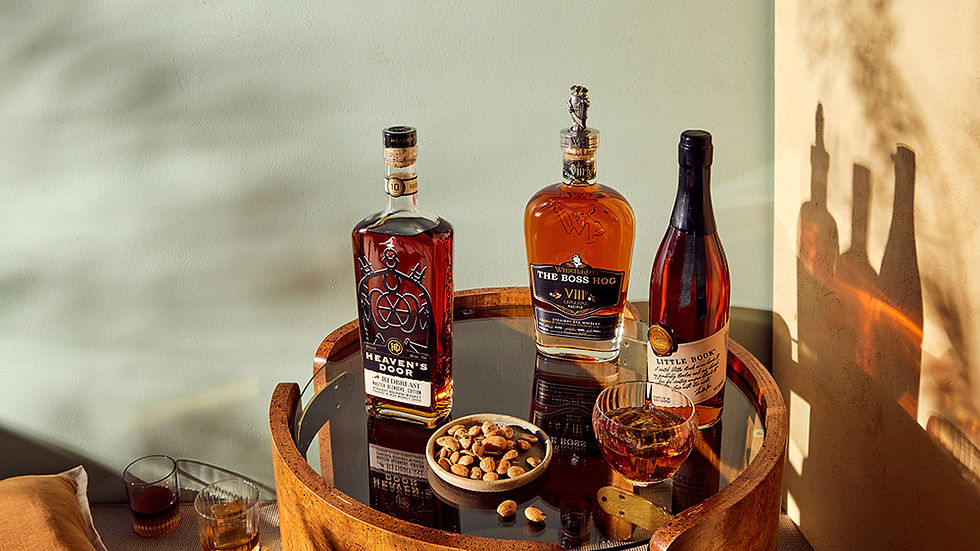
Cask-Finished Whiskey: Heaven’s Door, The Master Blenders’ Edition
The spirits world is over-saturated with sub-standard, cash-grabbing celebrity brands, but some, such as Bob Dylan’s Heaven’s Door, offer legitimate high-caliber releases. This special Master Blenders’ Edition is a collaboration with esteemed Irish brand Redbreast, which makes some of the best single-pot still whiskey on the market. Heaven’s Door’s 10-year-old bourbon was finished in Redbreast casks for an additional 15 months, bringing notes of fruit, sherry and a bit of apple pie to the palate. While Dylan’s name is front and center, the real artists here are master blenders Billy Leighton (Redbreast) and Ryan Perry (Heaven’s Door), who have put together a whiskey that sings with flavor and character.


Este artículo sobre la selección de Robb Report “Best of the Best” resulta muy interesante porque destaca la importancia de la calidad, el diseño y la atención a los detalles. Me gusta descubrir proyectos que reciben reconocimiento por su innovación y por ofrecer experiencias cuidadas para el público. También valoro los contenidos que presentan información clara y permiten entender por qué algo destaca entre tantas opciones. Este enfoque me recordó a https://casinohex-ar.com/casinos-online/paysafe-card, donde se explica de forma sencilla cómo funciona Paysafe Card en los casinos online, sus características y beneficios principales. Aunque los temas son diferentes, ambas páginas tienen en común la idea de ayudar al lector con información organizada y útil. Una buena presentación de los detalles siempre facilita…
Every successful community project starts with an idea, but turning that idea into long-term impact requires knowledge and experience. You can discover here a range of educational programs designed to support nonprofit founders through leadership training, fundraising guidance, and mentorship. These practical resources help changemakers improve organizational effectiveness, develop sustainable strategies, and create initiatives that make a meaningful difference for the people they serve.
Every successful community project starts with an idea, but turning that idea into long-term impact requires knowledge and experience. You can discover here https://littlebigfund.org/ a range of educational programs designed to support nonprofit founders through leadership training, fundraising guidance, and mentorship. These practical resources help changemakers improve organizational effectiveness, develop sustainable strategies, and create initiatives that make a meaningful difference for the people they serve.
Great article about these unique spirits! It makes me think of My Slain Dragon Bride - it's fascinating how both stories emphasize sustainability and craftsmanship in their own ways.
Mình cũng có dịp vào xem trang chủ GA6789 qua sau khi thấy trang này được một vài người nhắc đến, chủ yếu để tham khảo cách họ xây dựng giao diện và sắp xếp nội dung. Cảm nhận ban đầu là tổng thể được thiết kế khá chỉn chu, bố cục mạch lạc và các khu vực thông tin được phân chia rõ ràng nên khi theo dõi không tạo cảm giác rối mắt mà vẫn dễ hình dung cấu trúc của trang. Các danh mục được bố trí ở vị trí thuận tiện, giúp việc chuyển đổi giữa những phần nội dung khác nhau diễn ra nhanh chóng mà không mất nhiều thời gian tìm kiếm. Ngoài ra, khi…